
Air Conditioner Not Cooling? What to Check First
Most air conditioners that stop cooling do it in the middle of summer, on the hottest afternoon of the week, when the system has been running for hours without a break. The cause is usually one part, and often a small one: a capacitor, a contactor, a clogged drain or a filter that has finally choked the airflow. Below, each symptom comes with its usual causes and fixes, followed by the checks that are safe to make yourself and the signs that mean you should switch the system off and call.
Symptom, Cause and Fix
| Symptom | Likely cause | Usual fix |
|---|---|---|
| Warm air from the vents | Outdoor unit not running, low refrigerant or a failed capacitor | Test and replace the capacitor or contactor; find and repair a leak before recharging |
| Ice on the lines or coil | A clogged filter, a weak blower or low refrigerant | Thaw the coil, restore airflow, then check the refrigerant charge |
| Outdoor unit silent while the indoor fan runs | A tripped breaker, a pulled disconnect, a burned contactor or a failed capacitor | Check the power to the unit, then replace the failed start part |
| Water near the indoor unit | A clogged condensate drain or a full, rusted pan | Clear the drain line, test the float switch and replace a leaking pan |
| Breaker trips when the system starts | A failing capacitor, a compressor drawing too much current or a wiring short | Leave it off; test the unit and the circuit before running it again |
| Weak airflow | A dirty filter, closed vents, a crushed duct or a slow blower | Replace the filter, open the vents, then check the ducts and the blower |
| Short cycling | An oversized system, a frozen coil, low refrigerant or a misplaced thermostat | Find the cause first: airflow, charge or controls, before anything is replaced |
| Blank thermostat | Dead batteries, a tripped breaker, a blown low-voltage fuse or a float switch that has cut power | Replace the batteries, then trace the power: the breaker, the fuse and the drain safety switch |
Work Through It Step by Step
Answer the questions you can. The result points to a safe check, or tells you to stop the system and call.
Cooling Troubleshooter
Answer what you can above, then press Check My Answers.
Ice, Heat and Clogged Drains
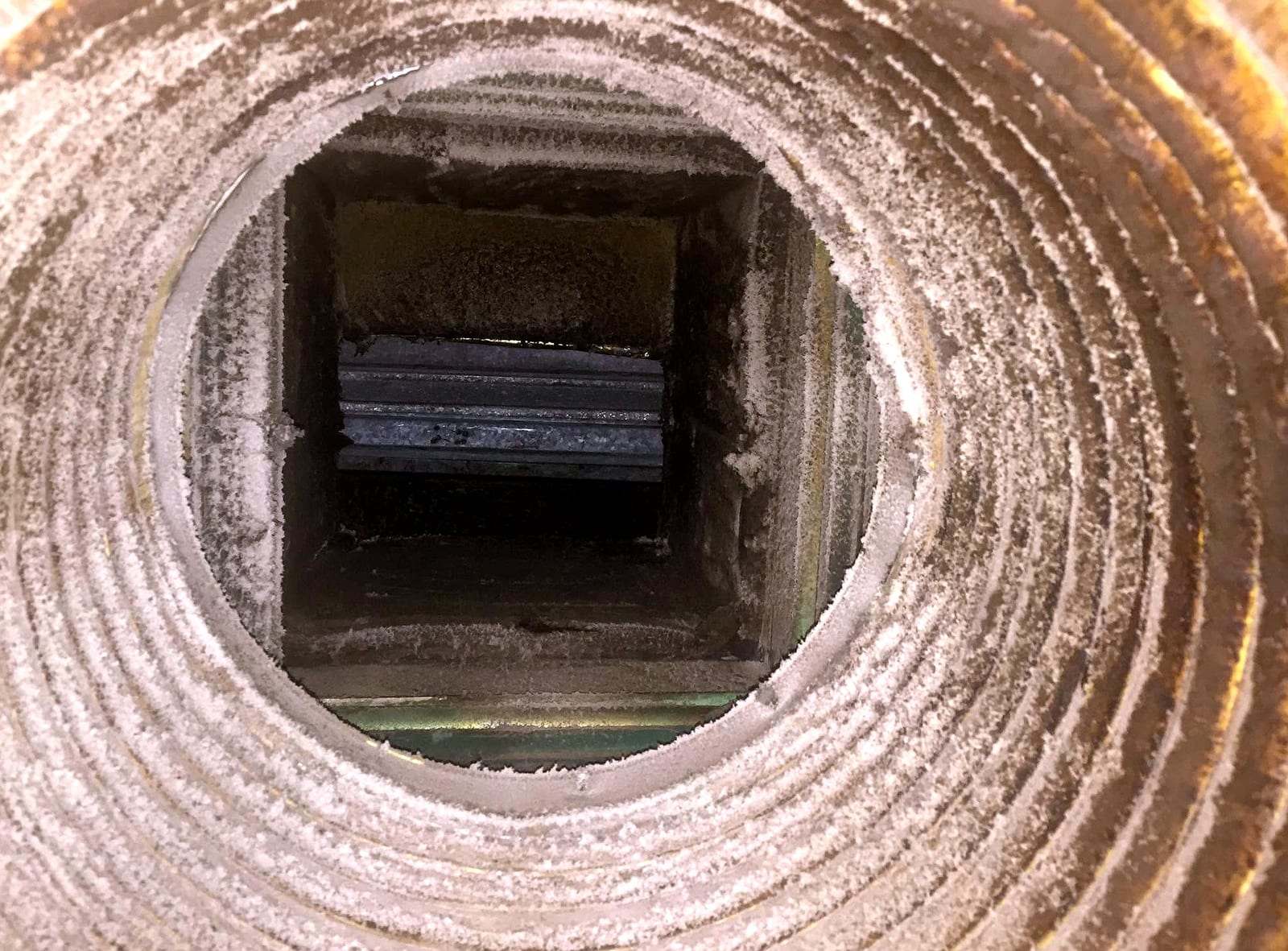
On 100 degree afternoons a system that was barely keeping up gives out. In many homes here the air handler and ducts sit in the attic, which runs much hotter than the outdoor air, so a blower motor or a duct seam that was already weak fails first in the heat.
Ice is the symptom people find most confusing: how can an air conditioner that is not cooling be covered in frost? When too little air crosses the indoor coil, from a clogged filter or a slow blower, or when the refrigerant runs low, the coil gets colder than freezing and the moisture on it turns to ice. The ice then blocks even more air. Pollen and dust load filters quickly here, which is why a filter is the first thing to check.
Hard water and algae clog condensate drains, and many systems have a float switch that shuts the cooling off when the drain backs up. A system that stops cooling with water in the pan is often that switch doing its job.
Before the Visit
- Set the thermostat to Cool and lower than the room temperature.
- Check the filter, and replace it if light does not pass through it.
- Check the breakers for the indoor and outdoor units; reset a tripped one only once.
- Clear leaves, grass and stored items from around the outdoor unit.
- Switch the system off at the thermostat if ice forms on the lines or the coil.
- Note the brand and model from the label on the outdoor unit, or take a photo of it.
- Do not open the panels on the indoor or outdoor unit: there are live parts inside.
Running a System That Is Not Cooling
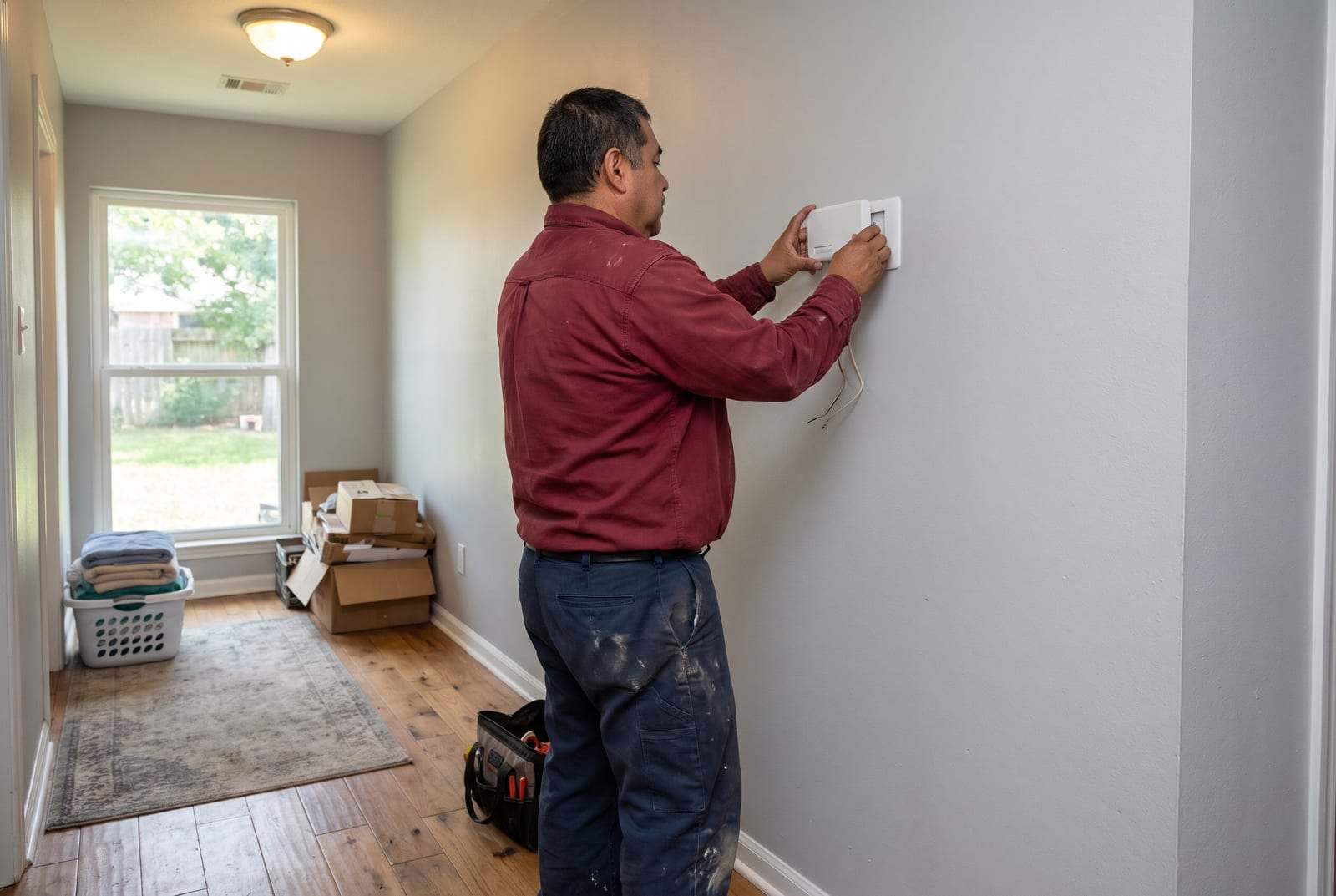
Is it safe to keep running an iced-up air conditioner?
No. Ice on the coil blocks airflow, so the system cools even less, and liquid refrigerant can flood back to the compressor and damage it. Switch the thermostat to Off, set the fan to On to help the ice melt, and call. Melting can take several hours, and the water has to go somewhere, so keep an eye on the drain pan.
Can I keep running a system that is blowing warm air?
Running it for a short while to see whether a reset thermostat or a new filter helps is fine. Running it for hours when it plainly is not cooling is not: if the outdoor fan has stopped while the compressor runs, or the compressor is struggling to start, it can overheat and turn a small repair into a large one. If the air is still warm after the safe checks, switch it off and call.
Should I add refrigerant myself?
No. A system that is low on refrigerant has a leak, and adding refrigerant without finding the leak only buys a few days. Refrigerant handling also requires certification under federal rules.
Still Warm After the Safe Checks?
Switch the system off and call (737) 637-3931, or send a request with the address and what the system is doing.